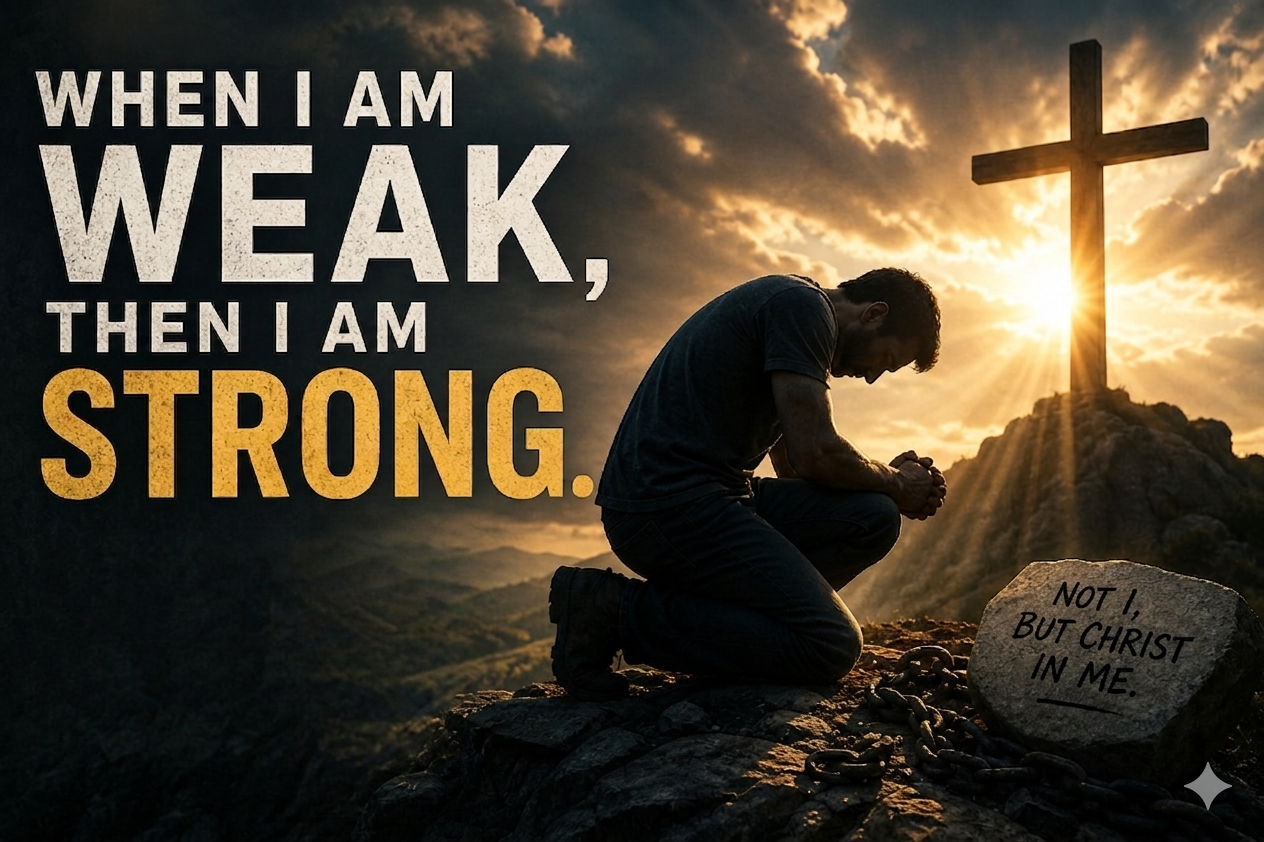
Not Measuring Your Day Based on How You Feel
I am sure that you have heard the phrase, “real versus feel.” It refers to how what we feel to be true often does not line up with actual reality. The argument is that we need to focus on what is real, because feelings are not always reliable measurements of truth.
In a comparable way, suffering can distort our feelings. This does not mean that our feelings are not real. They are. But they are not always the best measurement of faithfulness. Just because you feel peace and joy does not necessarily mean that you are honoring the Lord well. Likewise, feelings of heaviness, exhaustion, and weakness are not straightforward evidence that you have failed God. Sometimes it simply means that you are suffering.
Instead of asking, “How strong do I feel today?” the better question is, “Did I keep turning back to the Lord today?” Did you continue taking your anxieties and burdens to Him in prayer? Did you resist the urge to run from Him and from His people? Were you honest with the Lord about where you are? Did you take even one small step of obedience today? If so, your day was not spiritually wasted. You should be encouraged.
One of the enemy’s subtle strategies in suffering is convincing believers that if they are struggling deeply, they must also be doing badly spiritually. But that simply is not true. Some of the sincerest expressions of faith come through trembling hands. Some of the most pleasing obedience offered to God is given through tears. The Lord does not require His suffering people to appear strong. He calls them to remain near.
Receiving Joy Without Guilt
One thing that you may notice during seasons of suffering is that moments of joy can strangely leave you feeling guilty. There can be a sense that deep and continual sorrow is the only appropriate response to intense pain. A fun evening with a friend or a genuine laugh with your spouse can almost feel disloyal. You may even begin to wonder if experiences of joy somehow minimize the seriousness of what you are walking through.
But moments of joy are not acts of disloyalty. They are small mercies from God that help sustain weary people. The Christian life is rarely made up of pure sorrow or pure joy. More often, it is both at the same time. As John Piper observes, “The really wonderful news of Christianity is that in the midst of our sorrow, God can still awaken joy in himself that is deeper than our tears.”
Sometimes suffering even makes room for joy within the same day. So when joy comes, do not apologize for it. Receive it humbly as a gift from your Heavenly Father. It is not a denial of pain. It is a reminder that God is still loving, still kind, and still present even while you walk through suffering.
Asking For Help
We are taught to value independence and self-sufficiency. In some ways, that is good. Responsibility and diligence matter. Yet suffering has a way of crushing self-sufficiency because some burdens are simply too heavy to carry alone.
Unfortunately, suffering also tempts us to withdraw. Our instinct is often to pull away from others because we do not want to be a burden or because we assume no one will truly understand. As author and counselor Ed Welch writes, “Most of us do not even like to ask for prayer from other people, because we feel like we are asking too much.” As a result, we become less than honest. We tell people we are doing fine when inwardly we are barely standing beneath the immense weight of pain and stress.
But asking for help is not failure. It is humility. It is one of the ordinary ways God cares for His people.
Another reason we hesitate to ask for help is that we do not know where to begin. Everything feels too large, too tangled, and too difficult to explain clearly. Yet I have found that help often begins with both vulnerability and clarity. It means being vulnerable enough to ask and clear enough to explain how someone can help in a practical way.
Instead of only saying, “We are struggling,” it is often better to make a specific request: “Could you watch the kids so we can go to the hospital?” “Could you pray for our son’s surgery on Friday?” “Could you sit with me after church and help me process the week?” Specific requests make it easier for others to love you well.
The longer Amy and I have walked this road, the more willing we have become to depend on others. All the pretense is gone. If we have a need, we simply ask. And do you know what we have found? Many people genuinely want to help; they just do not know how. Clear requests give direction. In that sense, asking for help is not only a gift to yourself. It is also a gift to the body of Christ because it gives fellow believers an opportunity to bear burdens in tangible ways.
This does not mean that every burden should be shared with every person. Wisdom is still necessary, and some struggles are best discussed with a pastor, counselor, or trusted spiritual leader rather than someone you barely know. But suffering was never meant to be carried entirely alone. God often provides daily bread through the hands, prayers, and presence of His people.
There is no strength in pretending that you need less than you do. One of the most mature things a hurting believer can say is, “I cannot carry this by myself.”
Recognizing What Suffering Is Doing to You
Suffering can do many things in our hearts. It can deepen dependence on God, or it can push us toward self-protection. It can soften the heart, or it can harden it. Pain does not automatically make a person more tender, wiser, or more prayerful. Sometimes pain makes us defensive. Sometimes it makes us cynical. Sometimes it even makes us numb. That is why every suffering believer needs periodic evaluation. The question we must ask is, “How is suffering affecting the inner me?”
Hardness in our hearts and minds usually happens slowly rather than suddenly. Prayers start to become less honest or disappear almost entirely. Worship begins to frustrate us rather than encourage us. We become dismissive of the griefs of others because our own pain feels all-consuming. Our thankfulness becomes muted, and our patience shrinks. In some cases, hardness can even disguise itself as strength. What feels like composure may actually be emotional shut-down. What feels like realism may actually be unbelief taking root.
This is one reason suffering requires humble awareness. We must learn to ask, “Lord, is my pain driving me toward You or away from You?” “Am I bringing my sorrow to You, or am I building a wall around it?” These are difficult questions, but they are healthy ones.
The good news is that hardness is not irreversible. What is becoming stiff can be softened by grace. But it must be acknowledged. A heart that refuses to admit what is happening rarely heals well. This is where Scripture, prayer, and honest Christian community matter so much. Sometimes other believers can see our drift before we can. Sometimes a loving friend, spouse, or pastor can gently help us name what pain has begun to produce in us.
The goal is not to suffer perfectly. The goal is to remain open to God in suffering. A tender heart may still be confused, exhausted, and full of questions. But it is still turned toward the Lord. And that posture matters more than you may realize.
Discover more from Shane Colwell
Subscribe to get the latest posts sent to your email.